Blog Archive

Sunday, June 18, 2023

Top Ten Harry Potter Opinions

The video is about the top ten things Harry Potter fans can't agree on.... So, just things that fans bicker over basically. 😊 I've never noticed any strong infighting among the HP fan base like there is in other franchises so I don't know how contentious these things actually are. But, I love a good debate. So, I'll put in my two sense. The topics aren't ranked so I'll go in the order they're discussed in the video. (Not stopping to translate in-world words and phrases. If you want to know just ask and I'll be happy to answer.) 

1. Barty Crouch Jr. was Hogwarts greatest DADA teacher. 
I'm going to go with "no" on this one. Since he was doing a near perfect imitation of Alastor "Mad-Eye" Moody for the entire term, he was undeniably cool. And he did end up giving the students a boost in their defensive magic skills that affected their abilities in their various battles. But, as the video points out as an argument for the "no" side, Crouch Jr. was a lunatic who didn't realize that he wasn't doing the bad guys' side any favors by teaching them so thoroughly. And he taught them illegal, dark curses which, though done with what appeared to be a good intentions as part of his act, was still essentially the same thing that Amycus Carrow was doing in the 7th book. Lupin was the best. If he'd been able to retain the position he'd have had them caught up and plenty advanced in time for their O.W.L.s,  N.E.W.T.s,  and the final showdown with Voldemort .

2. Draco Malfoy didn't deserve his redemption arc.
Yes. Yes, he did deserve it. Absent of abuse and trauma, most children have some degree of cockiness and selfishness. Because they're children. Draco's cockiness was bolstered by the fact that his family was independently wealthy and benefited from many powerful political connections. Draco wasn't evil. He was a bully. Most bullies grow up to find a little humility. Adulthood is the great equalizer.. A lot of things change when we have to buy our own tires, so to speak. And the series itself even touches on that when fleshing out James Potter. Draco's humbling began earlier than adulthood when he realized that killing in cold blood wasn't something he could do no matter what he thought he believed and then discovering that his family's money and connections were worthless after seeing his once important father in a servile position under Voldemort. And unlike the video suggests I don't think Draco was trying to finally do the right thing by not exposing Harry at Malfoy Manor. I think he was terrified, disillusioned, and wanting nothing more to do with any of it. I think if he could have apparated to another country and gone into hiding with muggle-borns he would have done that after the end of the 6th book. Too bad be didn't pay any closer attention to his apparition lessons than Harry did. 

3. Harry Potter was kind of a wieny. 
In my review of the 5th book I said in response to the complaints that the protagonist seemed too self absorbed that those who thought that don't remember what it's like to be 15 and angry. I'm one of the people who argues in favor of considering the pressure he's under. Having the responsibility of being a Chosen One is enough to make anyone self-conscious, especially when they're young. I think, in fairness, when you look at how he handled the situations thrown at him, his internal courage is on display all the time. Always under a microscope but never losing his cool. The second and fourth books set the best examples. Also, he was called out on a lot of his brooding behavior towards his friends in the 5th book. He may not have been as attentive of a friend since his plate was pretty full, but he always put them first when making the hard decisions. 

4. Harry and Hermione should have been a couple. 
I fall into the "no" camp on this one. However, I'm somewhat sympathetic to the "yes" side. Ultimately, it's "no" for me because Harry is a hero and his love interest should be enamored with him to a certain degree. Ginny always adored him and grew to be his equal without losing that admiration for him. Hermione, on the other hand, never saw him as anything but an equal. Even a curiosity at the beginning. Their friendship was built on  mutually beneficial contention. Besides, Ron was raised with a domineering mother (in the best sense) and needed a strong woman to yank a knot in his tail now and then. Not unlike the way Molly kept Arthur in line when he was a little too interested in talking about his illegal flying car with the twins instead of upbraiding them about stealing it. That being said, I understand why this is a popular idea. Ginny's character was underdeveloped in the books. She wasn't even in Harry's greater circle of friends until the 5th one, so I can see how their relationship seemed to come out of nowhere. It was a little jarring, even for me. Then the movies turned Ron from a more complex and useful character in the books into a third-wheel, dead-weight buffoon along with adding romantic chemistry between Harry and Hermione that didn't exist in the books for no real reason except to satisfy the fans that liked to ship them together. It ends up being confusing for someone who is only a casual fan. Some argue that Rowling herself said she should have made them a couple but that was only after the books were completed and probably after a lot of protests from fans that would have preferred it that way. But I think she was smart to go with her first instinct and shouldn't question it. 

5. Sirius Black was a poor godfather to Harry. 
There only seems to be two anwers here. Either: Yes, he was a poor godfather because he used poor judgement and didn't try to see Harry more often. Or: No, he was still a good godfather because his poor judgement and inability to see Harry wasn't his fault. My answer is: Good thing he didn't HAVE to be Harry's godfather. He was named Harry's godfather when Harry was born but a newborn baby wasn't the center of his life. His best mates and the first war was. So when one of his friends betrayed him and had him sent to Azkaban to be mentally and emotionally violated by dementors for 12 years, it was only his knowledge of his own innocence that kept him from being driven insane. He escaped to save Harry but with no expectations from him due to his presumed guilt. Vengeance on Wormtail and possibly his own death in the process would have been good enough for him and at least as good as trying to convince a godchild he never met of his innocence. But the yeses and noes are both right in this case. If he'd been able serve as a surrogate parent to Harry after the 3rd book like he wanted to, he still wouldn't have used very good judgement after the years of damage and unresolved losses of friends and years. He would have needed a lot of therapy first. But, as things turned out he was just one of many adult influences around Harry. He did the right thing by not contacting him too much while he was on the lam. But, after he was in a safe place he was still in a sort of prison, so his his judgement was compromised by his feelings of uselessness compounded with the PTSD and even Harry knew it. He knew Sirius looked at him as though he had his best friend James back again and didn't take his advice to heart like he would a godparent. Otherwise, he wouldn't have so quickly dismissed the most useful thing Sirius gave him - the two way mirror. 

6. Neville Longbottom should have been the Chosen One.
I mean, they're not wrong! One of my favorite parts of the series was finding out that Neville could have been the Chosen One except that it was Voldemort who chose his own bane. He was a half-blood himself so obsessed with blood purity that he chose the boy that came from a muggle-born witch thinking he'd be a bigger threat. And that's why it's best that it was Harry. It was the extra kick in the head Voldemort deserved. Could have been Neville but still should have been Harry. And Neville got to prove his heroism too in the end. Really it was a win-win.

7. Dumbledore should have killed Tom riddle as a child. 
Oh come on, seriously? Must be the same line of reasoning that states that if time travel was real, then we should go back and kill Hitler as a child. Apart from the atrocity of killing a child, the answer is always "no" to this is because Hitler wasn't the only one who believed what he did. There was a network of people around him that also believed as he did. If he didn't survive to adulthood, someone else would have filled that void and history wouldn't have been much different. The same goes for a fictional Dark Lord, even though the magical world is greatly simplified from real life.

8. Albus Dumbledore was more evil than good.
Ah yes, the clarion call of deconstructionists everywhere. Good doesn't really exist because if it did then evil would have consequences. So, even good is technically evil, therefore we can't judge. So naturally, if a hero is realistically flawed then he isn't actually good. Does that about sum it up? Dumbledore was definitely more good than evil. He had a dark past that he paid dearly high prices for. But he had the opportunity to spend the majority of his life doing good things, promoting good ideals, and working for good causes, and he and he took that opportunity. Did he have underlying flaws that caused him to make bad calls even during his good years? Yes. They caused his own mortal wound. But, just because nobody is perfect doesn't mean that goodness is impossible or unattainable. As for raising Harry up as a lamb for the slaughter, let's face it, after all the time and research he put into it, he probably knew that the killing curse from Voldemort wouldn't work as expected but he couldn't tell anyone that because it would have spoiled the protective charm the action would initiate. He was a leader with a lot of responsibility that had to take great risks to himself and others while making the hard decisions. Sometimes that makes leaders seem cold and inhuman at times. And Harry had to start behaving that way too after Dobby died and he finally grew up enough to take on the full responsibility Dumbledore left to him. Dumbledore was good and he arranged for the good to succeed after he was dead making him more good than evil 

9. Severus Snape was a hero.
Okay, I'll admit this one is a little tricky. There are a lot of very valid reasons to make the claim that he was not a hero. I think it all boils down to how forgiving you are. I won't go into dissecting whether or not his feelings for Lily Evans Potter were really love or just an unhealthy obsession. I'll accept that he loved her. Were his feelings for her alone enough to ascribe the designation of "hero" to him? Because that seemed to be his only motivation. It's hard to grant a redemption arc to a character that's only there because he has to be. He was a terrible person and he never grew to be anything but a terrible person. He despised Harry and despised his own role as one of Harry's guardians. But he stayed the course. He made a choice to ally himself with the good guys and stuck with that choice for 17 years and even took the substantial risk of being a double agent. Why did he feel like he had to? He didn't actually have to participate. Someone else in his place may have even chosen suicide. It's not like Lily could come back to forgive him. And he couldn't forgive Harry for being James Potter's son. But, he mostly couldn't forgive himself and despised himself more than Harry. His guilt from the part he played in Lily's death was likely his driving motivation. Does that excuse him from being a horrible person? No, but I'm not entirely sure he was as horrible as he came off, or even wanted to be. First, because he did choose to do the right thing and fight for the right side. Secondly, because in the memory we see of him talking to the painting of Phineas Nigellus, he puts the former Headmaster in check for calling Hermione a mud-blood. So, clearly enough of a change had occurred that he could have become a better person. My read on the character is that he couldn't hate himself enough to punish himself for Lily's death and he needed everyone else in his world to hate him too. So, he either consciously or subconsciously made it happen. Yet he died keeping his word. He's probably not the textbook definition of a hero but he's a hero to all the people who will never be able to climb up out of their depression, yet continue to live and fight through life anyway. 

10. Books vs. Movies
This is absurd.. 😂 😂 Of course, the books are better. Even people who aren't HP fans know the books are always better. But does that mean that the movies were bad? Oh my, no. The movies did a great job especially considering all the material that had to be condensed. Cutting, splicing, and additions are bound to happen. Some of the decisions worked well. At least as many worked as didn't. And the casting was good enough to make up for what was missing. I'd like to think that everyone who thinks the books are better also have that sort of appreciation for the movies.

https://youtu.be/gOJ0YE1qwuA

Tuesday, March 14, 2023

Book Review


The Dragon Reborn, book 3 of the Wheel of Time series, Robert Jordan


Just as I thought I was seeing a pattern in the first two, this one does something different. Of course, as long of a series as it is, it's obviously going to take a lot of turns. The pattern I observed in the first two books was that the characters would begin heading to one place and end up in another. But the wheel weaves as it will, and this third book took a different turn. Like the next combination of footwork in a dance or the next movement of a music composition. This time everyone ends up in the destination they were headed to from the start, though some of them don't choose it right away at first. It kicks off with Rand as always. He rashly accepts that he's the Dragon Reborn, though he still only half believes it, and decides to "skip ahead" a few steps according to the prophecies that he's been trying to understand, as one might do on a suicide mission. Which specific order events should unfold in isn't clear to anyone, but he knows that the Dragon is supposed to be the only one that can retrieve and wield a powerful, sa'angreal sword - Callandor - in Tear, so he rushes off alone one night. He doesn't wait for Moraine's counsel as he, like so many others, still don't trust the Aes Sedai. But, that's the most of Rand's involvement until the end. After he leaves the focus turns to his small party of supporters that must follow him to protect him and fight beside him. The unintentional manipulation that his mere presence has on everything woven into the Wheel of Time makes him easy to track via the emotional turmoil he unknowingly leaves behind in the cities he travels through. They learn that members of The Forsaken are rising to positions of power in the most important cities and that one has likely set himself up in charge of Tear. So there's an overarching threat to be dealt with, although it's back-burner.

One prediction I got right was that, even though Rand is the most important one, all of the Two Rivers characters would have their own moments in the spotlight and this book is more about taking the time to flesh out Rand's friends, Perrin and Mat a little. Perrin is learning how to leverage his telepathic connection with the wolves without altogether losing his humanity. He's still not comfortable with it, but he is able to communicate in his dreams with one of wolves, Hopper, that died in the first book. He also befriends an Aiel warrior and is more accepting than Mat and others that Rand's heritage lies in the Aiel Waste and that an alliance with these otherwise feared and hated people is a necessity. In addition, Perrin is given a lady friend, Zarine, a hunter-of-the-Horn who prefers to go by "Faile" which means hawk, which also lines up with Min's vision of a hawk on his shoulder. He wants no part of Min's visions or Zarine, of course, but bonds with the young woman anyway and it helps to balance out the cast since three of the main women are in love with Rand, also per Min's visions.

As for Mat he is finally at death's door after the second book. He's taken to Tar Valon and healed of the influence of the dagger from Shadar Logoth. Healed from the directly evil influence anyway. But he's a changed man. His fighting skills are sharpened and his luck with gambling has heightened considerably. He doesn't have "powers" like the vast majority of the other characters do, but his change of luck is undoubtedly a consequence of his involvement with the knife and as magical in its nature as the talents of his peers. Will his luck betray him before the end? Remains to be seen. His personality is still a wild card. In his selfish, survival impulses, he wants nothing more to do with any of his friends, though it pains him, and to get away from the path they all seem destined to follow. But he ultimately can't abandon them entirely as he ends up choosing the go to Tear to try to stop an assassination plot against the Daughter Heir of Andor, Elayne. Along the way he also can't resist the temptation to keep testing his newfound good fortunes. Thom makes another appearance, flitting in and out of the story as one of the very best exposition characters ever. This time he throws in with Mat on his journey since he is practiced in the art of political intrigue.

And the ladies aren't forgotten either. Min doesn't get much time in this installment. She's packed off pretty quickly to report Rand's flight to the Amyrlin. But Egwene, Elayne, and Nynaeve are sent on their own quest. Framed as deserters from the White Tower in the previous novel, they are first displayed as being punished and ostracized for their actions so the Amyrlin can cover up sending them on a mission - to track down Liandrin and the rest of the Black Ajah - the evil sisters of the Tower that serve The Dark One and whose existence is publicly denied. All roads lead to Tear since Rand's move on Callandor was anticipated. So, they set out with hot tempered and arrogant Nynaeve taking the lead as always, Egwene butting heads with her, and the Andorian princess being the peace maker between the two of them. But Egwene was always the more open minded and her concerns about Nynaeve's aggressive disposition start to come to the foreground and find some validation as we see her beginning to mature and really embrace becoming an Aes Sedai. Something that Nynaeve's prideful personality has no intention of doing just yet. Egwene's special nature is also uncovered. She has the rare talent to prophecy with dreams (which are different from Min's visions) and to move within the realm of dreams. There's much more emphasis put on the realm of dreams in this book. Previously, The Dark One was shown as manipulating the three men through dreams that could physically harm them, but it was a one-sided view of that phenomenon. Now we see Egwene and Perrin are both are able to navigate through their dreams to overhear real conversations and take actions with physical consequences if they're unable to in the physical world. Each of them "checks in" on Rand throughout the story as they exercise their new abilities although they can't help or deter him since Ba'alzamon continually torments his dreams while he travels, to the point that Rand can't distinguish between the enemy's deceptions and the genuine outreach of his friends. The women also encounter and befriend female Aiel warriors and explore the cultural differences of the roles of women in their respective societies on their journey. In Tear they're betrayed, captured, and put in the hands of some of the Black Ajah. This is where Egwene's dreaming powers really come into play. They didn't need Mat's help, really. But his contribution to their rescue is noted and appreciated. I think that's a lot of the reason I've fallen for these books. They confront the beautiful and natural balance of men and women in the world that society has corrupted and tried to shame out of existence.

It ends with Rand claiming the sword and another confrontation between Rand and who he believes to be Shai'tan. But since The Dark One still doesn't have a body to inhabit, the fight was done by proxy. There's still a long way to go before he can finally face the final battle. They speculate that the unidentifiable corpse left behind belonged to one of the Forsaken called Ishamael. I thought that was an interesting choice since they were building him up to be one of the worst of the bunch. But, it was just speculation after all. I've read too much fantasy fiction to believe it just yet.

Anyway I don't know if you can tell, but I'm still just loving these books and I still would recommend them highly and I can't wait to get through the next one! 

Tuesday, February 28, 2023

Dark Shadows review


(Originally posted on Facebook back in early January but it deserves to be on my blog too. 😊) 
My first year back on days after 7 years on nights has been wonderful. Hectic and busier than I thought, but wonderful all the same. To celebrate being back on days we decided to watch through our Dark Shadows collection again. The original series, aired 1966-1971. We don't have the first year. Our collection starts at the introduction of Barnabas Collins and runs to the end of the series. It took almost all of this year to watch it, only watching some episodes at night during the week and skipping weekends. We finished just before Christmas. I've been meaning to write my "review" for a little over a week now. The last time we watched through it was when Todd started working days again after 7 years of nights. So, it's been a while. After all, it's not like the 26 (approx) episode seasons of a weekly TV show that averages 7 seasons. It's a five-episode-a-week soap opera for nearly 5 years (episodes # 210 through #1245 in our set! ), so it takes a lot longer to re-watch and shouldn't be done too much cuz it would ruin the experience. But every time we do re-watch it we notice different things because enough time has passed to forget the finer details.

This time around I was noticing a lot of really terrible editing cuts. Dark Shadows was filmed "live on tape" which means they didn't get do-overs on their scenes unless something went terribly wrong. So, you see a lot of boom mics, cameras, teleprompters, and people running around where they shouldn't be along with botched lines, random coughing from off stage, and other noises and shadows. That's part of the fun of watching this old show. I even read that the set caught fire off camera during one scene that they did not cut away from, and if you listened, you could hear them rushing to put it out. And we did hear it this time. It made me wonder what must have happened to warrant those terrible cuts I was noticing on this pass. Probably fits of hysterical laughter or frustrated cussing.. 😂 We also noticed this time around, to great hilarity, that almost every new character brought on mispronounced Collinsport, Collinwood and sometimes even the name Collins... They all kept adding a "g" - Collingwood. Collingsport. Collings. I was amazed and stunned that every new actor got it wrong in their first episode or two. All the way through to the final year when everyone should have known what they were auditioning for by then since it had gained quite a cult following. Such a strange quirk.

We also realized exactly why the show ran out of steam this time. We all know why it caught fire. It was on its way to cancelation so they brought in a vampire for tickles and grins and he ended up becoming the tragic hero that saved the show. But why was it on the brink of cancelation in the first place? It's because it started out as a soap opera in a haunted house environment. There was some vague, spooky tension. But mostly it was standard soap fare - love affairs, blackmail, revenge. Barnabas was brought in to do a brief retelling of Dracula and was intended to be staked by the main heroine. But after the ratings popped and the fan mail started pour in, the show exploded into literary fan fiction. Dracula, Frankenstein, The Turn of the Screw, Wolfman, Jekyll and Hyde. Smatterings of Edgar Allan Poe references - The Premature Burial, The Cask of Amontillado, The Tell-Tale Heart. All retold to the rhythm of prolonged soap writing. There were some original ideas too, or at least they must have been taken from more obscure supernatural stories because I've tried to research them and haven't found much. And after they worked time traveling into it, they had no limits. The pique of the series, I believe, was the 1897 Quentin Collins storyline, airing around episodes 670- 850. It had morphed from something resembling The Turn of the Screw into a Picture of Dorian Grey phase, concluding in a battle with a powerful modern mage type of character called Count Petofi who got his power from a disembodied hand. The character may have been inspired by the Count St. Germain. Everyone was at their best at this point. Writers and actors. And it stayed strong as long as the vampire was there to lead the stories.

But Jonathan Frid was tired of being the vampire in the last year. So they effectively ended the current 1971 timeline and went into an alternate 1841 timeline where Barnabas was never a vampire and Frid played Barnabas' normal, average-man, son Bramwell. They had a spooky story going on in the backdrop about a haunted room in the big house, but it was totally back burner to the love triangles, murder mysteries, and discovering the parentage of the adopted child in the family.  So, alas, it ended the same way it started as - a soap opera in a haunted house. It's true, they were running out of classic supernatural stories to remake, but losing the vampire lead character and leaning on gothic romance that wasn't much different than other soap material probably had a lot to do with its rapid decline and end.

But all in all, I liked a lot of things more this time around. I had a better sense of appreciation for the way most of the actors sold their characters and the way the writers handled them. They all had a thankless job to keep up with the break-neck pace of filming and script memorization. I wonder what we'll notice the next time we watch it through in 10 years or so..

Tuesday, February 14, 2023

Book Review


Radio's Greatest of All Time, Rush Limbaugh, Katherine Limbaugh, David Limbaugh 

It's not a book of straight-up, political philosophy like his best sellers from the early 90's or story books like the Rush Revere series he and Katherine co-authoured. And it's not memoirs. It's a selection of their favorite and/or most memorable transcripts from the Rush Limbaugh Show sorted by chapter heading, as well as private moments that Katherine recorded of him speaking to include in this book, accented with comments from those who knew him and pictures of his life, family, and viewers. It's a great follow up to James Golden's (Bo Snerdly's) tribute book of interviews and personal experiences with Rush, "Rush on the Radio", that he published not long after his death. A lot of these transcripts I remember and a lot of them I don't since they were broadcast before I started listening, or during years I couldn't tune in often. But they're all familiar because Rush's message, like his beliefs and values, never changed or altered in over 30 years. And they're not pages and pages of entire shows. Just highlighted passages from monologues, brief conversations with callers, banter with the staff that worked on the other side of the glass, updates on charitable causes, and other snippets of his life apart from politics talking about sports, cigars, or his pets. Even a passage needling his own audience - the "stick to the issues crowd" that would get very irritated when his talk was diverted from politics to football, television shows he liked, etc. Really, it's a great cross section of the program over the three-plus decades for people that have never listened. I definitely recommend it to anyone who was afraid to listen. It's hard for an average listener like me to summarize or explain the nuances. It's something you had to hear for yourself. Or, read for yourself, a small percentage of, now that he's gone. For those who were long time listeners it's a must have just as a wonderful trip down memory lane, an affirmation of our core values, and some really neat pictures from Rush in his youth to Elton John at his wedding to Kathrine, to his receiving the Medal of Freedom award. 
Do check it out.

Monday, October 10, 2022

Top 10 Favorite Books 2022

Top Ten Books* of All Time

Is there any pastime I appreciate more than books? The question is rhetorical and the answer should be obvious.  

Asterisk Notes:
* Limited to Fiction.
** Best Character. Does not have to be the protagonist.

Number 10
Title: Journey to the Center of the Earth 
Author: Jules Verne 
BC**: Hans Bjelke

As I was looking over my top ten favorite single books list from 2017 I find that once again, it hasn't changed, though it can be reordered. I tried thinking of all the books I've read since this list and even though I've read a lot of really great books, I guess I've just always remained emotionally attached to these. They're usually the first ones I re-read when I decide to re-read after a long, long period of time. (Well, if it's part of a series I typically start with the beginning of the set, but it still applies.) I guess that's my standard. It's hard to make this list. Maybe I don't get as emotionally involved as I once did. Or at least I don't get swept away from these ten in my initial excitement of newer reads that I end up loving as well. Most of these come from early in my reading ventures. Not all. Maybe that's why I am so attached... first loves and all that. But in order to follow the rules I had to remove the only non-fiction book in the list and pick a fiction replacement which was unexpectedly hard to do and why I'm a day behind. But I love a challenge.. 😂 

I'll start by moving this particular book, Journey to the Center of the Earth, to slot 10. I have, perhaps, read better, but it still has my heart. This is one of my all time favorite books. I loved it from the first time I read it. The reason I love the classics is that occasionally you'll run into science fiction that was written before science became so advanced. Before we went to the moon and so forth. And those old stories are so much more imaginative than new science fiction. Now, there has to be an element of realism in it with plenty of techno-babble to make it sound plausible, or it's regarded as childish. Maybe the old ones were a little childish but I prefer creativity that results from the child-like wonder to the sometimes depressing reality that results from well researched scientific possibilities. 
I like the fresh viewpoint in this book too. It's written in first person from the nephew's (Axel) point of view and he's the biggest whiner and wimp you can imagine. Most books would tell a story and create a tense and worried atmosphere when the mission is about to fail, but the voice that is telling the story in this book can't wait for it to fail all the way through. It just seems like a nice change of pace. And Axel contrasts well with the Icelandic eider duck hunter hired to be their guide, Hans. A stoic man of very few words, he's resourceful and solely focused on his job no matter what obstacles and dangers they face. He takes care of, not only the somewhat fragile Axel, but also his overzealous and obsessive uncle who devised the excursion. I guess it's more about the people than the science and its just a very good story.


Number 9
Title: A Wrinkle In Time 
Author: Madeline L'Engle 
BC**: Margaret "Meg" Murray 

More science fantasy. Well, more of a blend of scifi and supernatural. These favorite books from early on usually have another reason for sticking me other than just being a great book. I hated reading growing up but this is the first book I willingly read because it wasn't required reading. I got to choose it myself. And being around the same age as Meg, I was quickly mesmerized. Meg was a social outcast like me, only because she was a honor student in math, not a dork like me. But a connection was formed. After Meg's dad goes missing while working on a tesseract, which isn't a four dimensional analog of a cube like in geometry, but a fifth dimensional phenomenon that folds space and time in this case, three immortal beings use the tessering method to transport Meg, her baby brother who is a child prodigy in science, and a new friend, Calvin, also well above his age in intelligence, who would be her love interest in later books on a journey to rescue him from a darkness that is overtaking worlds. Her brother's curiosity is so strong that he's easily compromised and it's up to Meg to rescue her father with Calvin. She then has to go back to rescue her brother and fight the IT that controls the planet telepathically alone. Her strength of mind and special bond with her brother that would be explored further in the sequels is why she is the only one who can save him. 
I can't claim that Meg inspired me to become a smart kid but it was formative for the kind of books that I would come to love. Reluctant heroes. Fantastical places and creatures. Different enough to stand out in its genre, at least to me. I was increasingly disappointed with each sequel in this series. But this first book will always stand alone as one of the best and one of my favorites.


Number 8
Title: Treasure Island 
Author: Robert Louis Stevenson 
BC**: Dr. David Livesy 

Okay, Treasurer Island is the book that hooked me on reading. After I finished highschool and had nothing better to do with my life I decided to do the great experiment and compare a book to a movie, the Disney version in this case. Needless to say, my life was changed forever. It not only hooked me on reading but motivated me to read more of the classic literature they push on you at school. I decided that I'd, perhaps, not been giving it a fair chance and that there may be something to the reading lists in school. So far it's been a hit and miss adventure that I'm quite enjoying. It also gave me an appreciation for "children's" literature. This book is clearly a kid's book but also written in a time when kids were certainly tougher and more able to process the adult themes presented in raw detail that adults can appreciate and not requiring sugar-coating or being burdened with a lot of psychology as an attempt to make it less scary. I would go on to never outgrow nor underestimate Children's and YA literature. 
However, I do wonder if young boys of that bygone era were just as surprised by the twists as the main character was? Were they fooled by Silver like Hawkins was even after reading all the evidence that he was the deadly pirate he was warned about? Would the fact that Ben Gunn found the treasure years prior being marooned on the island have made their heads explode? It all seems so obvious now reading it as an adult or even young adult in the late twentieth/early twenty-first centuries. I had it all figured out quickly on the first read, even though it didn't lessen the excitement. I guess that's why Dr. Livesy is the best character to me. He's the only adult in the room. Hawkins, as a tween, is meant to be naive, impulsive, and a little reckless because he's the protagonist and charmed with the luck of youth. But there's no excuse for characters like the Squire who funds the expedition, bragging about treasure hunting to everyone he meets, and treating the experienced Captain badly for voicing his concerns. Even the Squire's servant is loyal to the point of being unhelpful, never questioning orders even early on when some things seem definitely off. Dr. Livesy takes all the characters in hand as soon as he meets the unhealthy, old pirate that it staying at Hawkins' mother's inn at the beginning. He stands firmly up to him and everyone else including the Squire and Hawkins when necessary. All of the men on the Hispaniola's side acquit themselves as brave and honorable, but Livesy's common sense made him a cut above. He also tends to the pirates' wounds and diseases during their seige as well as his own mates, making him an awesome doctor. He, as a magistrate, even knows when it's best to just let things go when Silver escapes at the end. He isn't bent on pursing him, but just helping to pick up the pieces of those who survived. And there's the pay off of actual treasure dispersed among the characters instead of just a "treasure in your heart" message. Who couldn't love this book?


Number 7
Title: The Phantom Tollbooth
Author: Norton Juster
BC**:  Tock
This is the replacement for the non-fic book in my list and it's a relatively recent read for me. It's a kid's book, much more so than yesterday, but it's the kind that can be revisited from 6 to 60 with new meanings to be found each time. It's filled with puns, wordplay, and literal takes on idioms that are not only funny but strategic in making the points. It's chaotic silliness for a child and a smart wink and nod to adults. Often compared with Alice's Adventures in Wonderland, I think it's actually better. It's much more clever and not a disturbing downer like Alice was. Then, I learned it was written by the same guy that wrote one of my all time favorite stories from my childhood as animated by Looney Tunes - The Dot and the Line: A Romance in Lower Mathematics and it all made sense. Oh, my heart! That explains why I found myself really enjoying it. The lessons aren't just for kids and the plot is surprisingly relevant to today. Especially to today, if you find yourself searching for Rhyme and Reason. Having only read it once, I can't recall enough of the details to explain why Tock is my favorite. Probably because he's Milo's main guide and helps him out of the various obstacles as he stumbles into a world divided between lovers of words and lovers of math trying to reconcile them by rescuing the princesses, Rhymn and Reason who can bring the two sides together. The two sides could be seen as emotion and logic or any number of the timeless conflicts within human beings and humanity at large. There are a lot of deeper meanings to explore which is why I picked it. It needs to be re-read and not just by me. If you've not read it since you were a child you should re-read it. If you've not read it at all, I recommend it for adults as well as children. The wisdom is timeless. I can only hope it's not either too smart for modern kids or that modern kids don't think they're too smart for it. Same goes for adults. 


Number 6
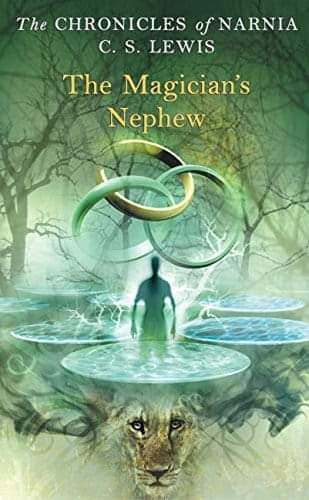
Title: The Magician's Nephew 
Author: C.S. Lewis 
BC**: Jadis
 
This one is the first of the Narnia series. 
The interesting thing about the series is that The Lion, The Witch, and The Wardrobe was my least favorite of the set. Not because it was bad, but because it was first. They just kept getting better and better as he went along. The Magician's Nephew was, in fact, my favorite. It was written last, or at least at the same time as the last book and released last, and was a prequel before prequels were cool. The concept was the most beautiful, with the Wood Between the Worlds and the rings required to get there. The way Aslan sings Narnia into existence and all the animals begin to think and speak. And the description of Charn was especially chilling. It brings the series full circle. Diggory Kirke would grow up to be the Professor Kirke from The Lion, The Witch, and The Wardrobe. Polly would reappear in The Last Battle, now old like Diggory, so she her presence needed to be explained. Also covered is how the lamp post spontaneously grows in the middle of nowhere in a world that will never have electricity because the arrival of the Earth children disrupted and augmented Narnia's initial development. And how they introduce evil into the brand new world by accidentally bringing Jadis along from Charn. How did there come to be a White Witch in Narnia? That's how. And the cornerstone motivation of Diggory's quest to heal his ill mother ends up explaining how he would manage to have a wardrobe in his house one day connected to Narnia that the Pevensie children would find. The creative writing is simply unmatched. Even with all the newest world-building techniques for fantasy writing, this is still some of the very best and Lewis was probably not even trying... apart from tying up loose ends when writing the end of the story and Narnia at large. 
As with all YA fiction, I usually like the adult characters the best and my favorite character in this book is Jadis, the future White Witch. Not because there's anything to like about her. She's dangerous and even quite terrifying for a book aimed at young kids. What I like about her is how she treats Diggory's uncle Andrew. He's the novice magician that invents the traveling rings. Jadis is evil but Uncle Andrew is the worst. He uses the children as guinea pigs to test the rings not knowing or caring what will happen to them. He's arrogant and shameless. At one point on their travels with the rings, Jadis manages to follow the kids back to our Earth. Andrew believes he is her equal but she puts him in his place as a servant to her. Between that and his ego deflating experience with the new animals of Narnia, he gets everything he deserves. Though you have to admire his spirit and underlying cluelessness of his own shortcomings because he remains impressed with (and perhaps a little attracted to?) Jadis for the rest of his life after its all over. A dem fine gel.. A spirited gel. 😂 😂 Too funny. I love this book so much.


Number 5
Title: The Count of Monte Cristo 
Author: Alexander Dumas 
BC**: Edmond Dantes 

I thought this list would be an easy copy/paste project since I'm a reader talking about my favorite books but I'm a little amazed at the fact that I've not actually made a written review of at least 80, probably 90% of them.. 😂 This one included. 
The Count of Monte Cristo is such an amazing book. It's head and shoulders above The Three Musketeers. Of other revenge stories in the same genre that I have read such as Hamlet or Wuthering Heights, I think this one is definitely the best so far. It's a dense novel that, I admit, is smarter than me since the setting at a specific time in French history isn't one I've studied with great enthusiasm. And the setting, the hundred days after Napoléon left Elba Island, is very much a part of the story in the beginning. Political intrigue is the catalyst of what lands the protagonist, Edmond Dantes, in prison wrongfully. Two young men who he supposes are his friends plot against him. One is jealous of his quick promotion through life, already set to become captain of his own ship at 19 years old, and one jealously wants his fiance for himself. The nail in his coffin comes at the hand of a politician he's never met but whose career could be ruined if Edmond is allowed to proceed on one final mission for his deceased captain delivering a message to another exile on Elba. He's put away as a Bonapartist spy for life without a trial. Dumas makes it feel like it's happening to you, it's so traumatic and enraaging. It helps to make you understand how he's still motivated after 14 years of waiting and planning to return to exact his revenge. Educating and training himself to create not one alternate identity but several depending on whose life he would be touching at the moment. After all, it's not just the men who wronged him that he has to deal with now but their families as well. Their children or parent in one case. And he's kind to them all within his power, not revisiting the sins of their fathers on them. He's kind to his ex-fiance too after she's married these years to the man that stole her in the grand plot to ruin him, although he never moves to reclaim her because he had sought vengeance on her husband. And that's where this book becomes wonderfully complex and thoughtful. He doesn't enjoy his revenge. He's appalled by the ensuing madness of the politician and the suicide of the man that took his woman. After he financially destroys the man who envied his position in life he shows pity on him, rescuing him from debtors that would certainly kill him and even giving him a sum of money to start over with. It leaves a me speechless every time and it's us one of the first books I re-read when I take a break from new material. It'll always be in my top 5.


Number 4
Title: Harry Potter and The Prisoner of Azkaban 
Author: J.K. Rowling 
BC**: Professor Remus Lupin 

Looking back on the series, I think that book 4 is the better book and the pique of the set. However, this is my favorite book of the series, most likely because it's the first one that I read. For some reason that always factors into how attached I become when I read books. It's also the book in which the primary story line starts to gain traction. In the first two, the hero saves the day and saves the girl and it's mostly fun and games. It was established that Harry belongs in this world and in this role as the potential savior of the world, but the how and why of this role has been mostly glossed over to make way for building the foundation of the world. It was also determined in the first two that defeating Voldemort is the end that must be worked toward, but Voldemort hasn't been much of a threat to the wizarding world thus far. Azkaban begins to set the table in earnest for the final show down. And it is done without any contact with Voldemort at all which is a creative plus for me and sets it apart from the other six books. It rounds out the cast, introducing most of the rest of the key players and also starts to add a layer of complexity, and add color to the black and white standard of good vs. evil. with not everyone and everything turning out as expected. Dark creatures are utilized even on the good guys' side, and there are bad guys who aren't as much bad as they are broken and pitiable even though they've chosen their alliances poorly. 
One such complex character is Professor Lupin. He's a werewolf. Lycanthropy is a disease in this universe that leaves the victim of forever outcast from society, driving most suffering from it into the criminal element. But Lupin was nurtured with good friends and being given a break especially since there was a recently developed treatment available to help him over the courses of the full moons. He's a tragic character because he's good and does his best to not let his condition impede that goodness. But for all the good he does, he still gets the short end of the stick and has to deal with being socially isolated among other battles he must fight to try and live normally throughout the series. His presence is what gives this book its heart and why it holds its place as best of the set for me as well as contributes to a really great book.

Bonus note: reading the books as an adult I already knew of and loved the outside references such as the name Remus Lupin - "Remus" from the mythological founding of Rome being raised with Romulus by a wolf and lupins being known as "moon flowers". There's so many details like that in all these books and it's just so delightful.


Number 3
Title: Lord of the Rings, The Fellowship of the Ring 
Author: J.R.R. Tolkien 
BC**: Aragorn son of Arathorn (Strider) 

So, we come to the grandfather series of fantasy. I've said before that reading this trilogy is an undertaking. The Hobbit is more of a kid's book (very smart and advanced kids). The Lord of the Rings trilogy is a long novel divided into six parts over three books, involving a world with a long history, religion, several languages, and it's very British. 😂 But it really is a work of art not unlike a symphony with several movements. I guess I've always just liked the first movement the best. It's hard to pick a favorite from this series because the three books aren't really separate. But I've always loved a slow build. It really is like classical music. Soft and lively character introduction. The shadow of evil is looming in the background for a long time before springing the story into intense action. However, the rest periods it shifts into are still mostly light-hearted and happy in the first book. Truly refreshing after the dangerous and frightening events they experience. In the following books the rest periods are weighed down with the darkness that was enveloping the missions the different groups were on. There was an innocence about the Fellowship when they were first formed and still traveling together before race to destroy the One Ring really begins. 
Even harder is to pick a favorite character. Sincerely. Frodo is the kind of reluctant hero figure that I love. Sam is so easy to relate to I can almost feel myself in that part. Gandalf, the wise mentor. The dynamic between Legolas and Gimli just gets better and better. But Aragorn is the glue that holds it all together. From his introduction he's taking care of everyone and leading even when Gandalf is the designated leader. Of course, he is the rightful king of Gondor so even in the presence of Elrond and Galadriel he carries himself like royalty. But even as the Ranger, Strider, he's naturally given to taking charge. And he's got the best opening scene/description in all of literature. Always one of my favorite parts to read and it's in the Fellowship of the Ring.


Number 2
Title: Watership Down 
Author: Richard Adams 
BC**: Hazel 

Another kid's? story. I have a copy with a forward by the author which explains that it was just a story for his kids on a long drive, but either they were very grown up for their ages, or he altered it slightly when putting it in novel form. It's never seemed like a "kid's" story to me. Nor did it to anyone else who saw the 1978 animated movie that was based on it, which was one of my childhood favorites. It got a lot of complaints about violence and heavy subject matter. All warranted. But it was just following the book. So much so that I didn't fully understand it until I read the book as an adult. I had the same experience with The Last Unicorn - a favorite childhood animated movie that stayed remarkably close to its source book. It's like they try harder if they're an obscure, inexpensive movie. I'm glad I grew up in a time when they made more serious cartoons that dealt with adult themes and wisdoms. But, I digress.. 
Even though they are anthropomorphized rabbits, they can't physically do anything a real rabbit can't do like write letters or sword fight and none of characters are juveniles. In fact, it's kind of a minor zoology lesson in rabbit behavior along side the story. It's rich and textured with military type heroes, accurate psychological profiles and even faith within the rabbits' primitive mythology they follow. There's so many great lessons in leadership and rudimentary layouts of different types of government as the rabbits journey from a definite class system to set up a republic and then free other rabbits from a totalitarian society that they war with. Hazel's runt brother is a "Cassandra" figure who foresees the destruction of their warren and an ideal place to form a new one, but is not listened to. So Hazel decides they'll leave but what he's not counting on is that others want to leave too. And all look to him to lead, even, eventually, the rabbit who was the captain of the guard in their old warren. Even when they question why he's trusting his brother's visions. They meet countless natural dangers and are nearly lulled into joining a warren of rabbits that are unwitting livestock for humans. Then, after their ideal warren is established, his leadership is tested when, realizing their group has no females, he sends a bird to spy the land, finding a closed society of rabbits led by a mad dictator. He formulates the plan for retrieving does from their warren (and any others that want to come) and strategizes the battle to defend their own warren when the dictator comes to take his own back and destroy them. He bears the burdens from the beginning and the scars alike and lives to see his society flourish to multiple generations before he dies of old and goes to his reward after death. Kid's story? About as much of one as LOTR, maybe. I ball like a kid when I read or watch it now. I love it more than the movie but it also makes the movie better somehow. It's on my very short list of approved movie adaptations. And it's one of the greatest works of fiction ever, in my opinion.


Number 1
Title: Out of the Silent Planet 
Author: C.S. Lewis 
BC**: Dr. Elwin Ransom 

My husband used to run cardboard at the city and had occasionally indulged in a little dumpster diving. Not like a hoarder grabs random, useless garbage full of bugs... Seriously, a brand new set of drinking glasses, still in their box with only one broken was a good find and I used them for years... He'd also pick up books for me if they were in decent condition. This is one and it sat on my bookshelf for a long time. I didn't know who Lewis was. (Any memories of The Lion, The Witch, and The Wardrobe from childhood were vague and more likely of a cheap, animated film than a book.) I kept it with a stack of Asimov Science Fiction and Analog Science Fiction digests because it's science fiction too. It's science fiction with a twist on the scifi trope that I usually complain about in alien-oriented scifi. But in this book, instead of humans having to learn a lesson about how they're shamefully inferior to the alien race(s), the humans must learn a lesson about being humble before God from the planetary spirit that the aliens look to for leadership. The aliens are superior, in a way, but only by the grace of God. 
The story follows Dr. Elwin Ransom, a philologist (Lewis' wink at Tolkien) as he stumbles on a scientist and an old school fellow, Dr. Weston and Dick Devine respectively, while walking through the countryside. Unbeknownst to him they've been to Mars already and have plans to exploit that world and eradicate the natives for the progress of human civilization. Ransom's unfortunate timing gets him kidnapped by the men with the intention of handing him over as a sacrifice to one of the native races they assume to be savages. But he escapes and over the course of the book interacts with all three of the intelligent races on the planet, learning their common language, and rediscovering his faith. There are plenty of action sequences with his abduction and flight. Also when he's pursued by the men later on. But a large portion of the novel is a dialog on philosophy. They reader, in essence, is learning religion from the aliens who, though they share the humans' Creator, don't have the same words and references that are known on Earth because they predate Earth's history. The conversations are cerebral, yet simple so that you don't have to be an academic to follow. Ransom learns that the planetary spirit of Earth turned bad (bent) and attacked Mars and other bodies in the solar system. Malacandra (Mars) is not a paradise. The damage was done but it was limited since its own planetary spirit, Oyarsa, helped to fight the Earth spirit and helped to capture him and bind into the air of his own world, making Earth a silent planet with the inhabitants cut off from the celestial realm. An imaginative account of Satan's fall from Heaven and subsequent corruption of humanity if these were really other beings from Mars, etc. that could observe it from the outside. The trial scene at the end when they all end up before Oyarsa is cringy for all the right reasons. In the end they're allowed to return to Earth with their way back destroyed. Weston and Devine don't learn any lessons and are dealt with in turn in the following two sequels. But Ransom is changed forever and so was I. It caused a spiritual reawakening in me and I wanted to start really studying my Bible after that. So, even if it's not a "great" book, it did its job as a witness. 
A fun thing about this book is that Lewis wanted to work in the odds and ends of world building that were probably edited out to tighten up the story, so he inserts himself in the end as being in contact with Dr. Ransom (a pseudonym, apparently) who has charged him with penning the true story of his adventure to Mars as a work of fiction so that more people can be reached and warned about Weston and Devine's (also "fake" names) interstellar plans. He puts it all into a couple of correspondence letters between himself and Ransom. It's a neat trick that Michael Crichton would use a lot in his works... fudging the line of fiction and reality. 
It's still my favorite book. After I re-read that trash copy until it fell to pieces I bought the Space Trilogy. They can be read separately or as a set and they're all good. 

Friday, September 30, 2022

Book Review


The Great Hunt, book 2 of the Wheel of Time series, Robert Jordan

*spoilers because it would be impossible to review them otherwise*

You always wonder if a long series will continue to stay as captivating as the first book. But no worries here. The first book was a great hook but the second book digs in and pulls you further along.

All the characters were introduced in the first book along with a low resolution layout of the social-political structure of the world, and it ended with the realization that the male protagonist could indeed channel the One Power and use magic which is forbidden for men. Yet, the support he received would indicate that it must be allowed in his case because he is believed to be the Dragon, who will defeat the Dark One, Shai'tan, once again. The Dark One, in the first book, could not operate at full capacity since he was and is still imprisoned, though slipping gradually through the cracks. So, he was temporarily damaged enough to be held at bay so that the characters and world building can carry on while setting him up as the final enemy to be defeated in the end.

Anyway, most who know me know one of my favorite tropes is the reluctant hero and I actually like how far ahead of the characters the reader is in this one. It's obvious in the first book that Rand is the "chosen one" figure who will be the hero of the story. But his reluctance almost to the point of naivety is justified due to the way the world is imagined and it's irresistible to watch him living in denial of his destiny throughout this entire installment before resigning himself to his fate at the end.

The world itself comes into sharper focus in this book too. The different kingdoms and the political landscape is explored earnestly as Rand maneuvers through the task he's given. He tries not to stand out or make any waves but only ends up becoming a person of interest which only puts a spotlight on him when he is revealed for what he is. The other young men from Two Rivers accompany him on the quest at hand because one of them is in need of a stolen knife from the first book that is directing his own mysterious destiny. However, while the first book gave equal time to the five ta'veren (a person who is a pivot point in the Wheel of Time that many destinies are woven around), this book stays mostly focus on Rand. I look for each to get their own push to the front before it's over. But, the ladies get an adventure of their own in this one as well. The two girls from Two Rivers begin their training to be Aes Sedai but not much time is spent with the drudgery of learning magic. Instead they are betrayed by one of the Sisters and, at least attempted to be, sold into a form of slavery. Rand becomes aware of their situation towards the end and wants to rescue them, especially Egwene, but they along with their other two lady friends who were also staying with the Aes Sedai rescue themselves and contend with their own growth and battle scars.
Their story has no direct bearing on the main thrust which Rand is involved in, but complements it by adding to the complexity of the landscape. The people they have to contend with as enemies are not shallow, simplified, and necessarily easy to place as evil even when they're not sympathetic like Seanchan people who were holding the women as captives. All of the factions and leaders think they're working against The Dark One even if they're only doing harm and inadvertently making his return easier. Instead of being threatened by one dark lord, it conveys the sense of the whole world being against the protagonists. Only the small group of heros/heroines has any clue as to what is really going on. It's frustrating and so much fun.

Summary of this book: The Horn of Valere that was found at the end of the first book is stolen at the beginning of the second. Rand's responsibility is to return it to where it was being kept. But a pattern I'm starting to notice in both these books (a pattern that I'm enjoying too) is that the first course that the characters need set out on is not where they end up. In the first book they skip their destination of Tar Valon to prematurely face the Dark One in the Blight where he's imprisoned but his hoards still live. They find the Horn about halfway through this book but never get the chance to return it since it's stolen again and taken to a place where it must be used to defeat the Seanchan who were spreading like a cancer throughout the region, taking advantage of the people's ignorance of the past ages. That's the short version of the book but there's so much more to it than that.

Indeed, there's so much story in these books that it's impossible to keep up by just my summaries alone - so many secondary and wild card characters affecting the events - so I still definitely recommend them for fantasy lovers. It's an exceptional series so far and I'm already enjoying the third book. 

Wednesday, September 28, 2022

Book Review

(Re-upload. I finished these some time before the previous entry but it got deleted by mistake) 

The Chronicles of Prydain, Lloyd Alexander

I was inspired to get this set after seeing something regarding the Disney movie, The Black Cauldron. Something about how it didn’t do well at the box office, and it didn’t. I remember when it came out but I don’t think we got that one and I only remember bits and pieces of it. Perhaps it was mishandled. Anyway, I was wondering if it was based on a book, and low and behold, I found five books with The Black Cauldron being the second of the series. The name Prydain sounded familiar and I remembered that my friend Jenny, had recommended the Prydain series some time ago, so I took a chance on ordering the whole series since it wasn’t overly expensive anyway. 
I’ve since had a chance to wonder-why is it sold so cheaply? This is an excellent series, and should better known that what it appears to be. Of course, I’m always late to the table on such things so maybe it’s more popular than I’m aware. It’s a YA high fantasy series that channels the spirit of Tolkien’s Middle Earth sagas. It’s also plainly a strong influence for British writer J.K. Rowling when she was composing the Harry Potter universe, since Prydain is not so subtly steeped in a Welsh setting and written during Rowling’s childhood years. It could almost be the young adult version of the Lord of the Rings series, except it’s less complex, quicker paced, and not as heavy with more humor infused into it. And the method Alexander employs to develop the characters is the same layout Rowling chose for Harry Potter. She follows Harry’s growth from year to year, as Alexander follows main character, Taran’s growth from the time he’s, perhaps, 15 until his early 20’s. His age and the time passed isn’t as clear in this story. But with each entry he gains experience, wisdom, and the tales have less and less of a children’s tale feel to them. 
The first entry, The Book of Three, is the lightest of the stories. It introduces the characters around a kingdom with a very rich background for as simplified and child friendly as the writing is. Prydain was once ruled by and evil enchantress, Achren, that was overthrown by an even more evil Enchanter, Arawn.  He’s struggling for power against the rightful High King of the land and the smaller kingdoms, cantrevs, that pledge loyalty to him. Adopted Taran lives with an old farmer and powerful enchanter on a farm with a prophesying pig, dreams of battle and glory. He is thrust into the chance to find it when the pig is scared away by the dark forces hunting it and he goes to retrieve her. But it doesn’t give away too much at once, which is something I appreciated in the Potter series and others of its ilk. The pig does no prophesying in this book. Nor do you find out the old farmer is a retired warrior. The Book of Three that is owned by the old wizard isn’t even explained to any kind of satisfaction. But along the way to find the pig, Hen Wen, the world is build and he meets the important characters that will accompany him through is adventures and growth. He teams with a bard named Fflewddur Fflam (obvious Welsh influence on spellings, lol) who is a king by birth but prefers to travel the country practicing his art with a harp that forces him to be truthful since he has a tendency to embellish his stories. Love that harp. The heir to the kingdom of Prydain under the High King befriends him and a scraggly simpleton kind of creature called Gurgi, the comic relief and sort of Gollum element only he becomes the most loyal pet-type of person. He also meets the co-main character Princess Eilonwy who is beholden to Achren at first but an enchantress in her own right who becomes an invaluable equal partner to Taran challenging his views of her station as a woman and a lady in need of protection and to be bound to her castle. It was the 60’s after all. But what I love most about Eilonwy is the similes and comparisons that Alexander afforded to this character. It’s such a smart and funny way of teaching proverbial truths that are more heavy handed and poetic in adult centered novels. Just a few examples, I can’t resist: 

"If you stop now, then you've given up Adaon's brooch for nothing! That's worse than putting a necklace on an owl and letting it fly away!"
"He helped us – he certainly did that, just the way a robber helps you tidy up your house!"

"The only thing you have to decide is how we shall escape from this tent. If you're thinking of anything else, you're wasting your time. That's like wondering whether to scratch your head when a boulder's about to fall on it."

"It's silly," Eilonwy added, "to worry because you can't do something you simply can't do. That's worse than trying to make yourself taller by standing on your head."

"I can't stand people who say 'I told you so.' That's worse than somebody coming up and eating your dinner before you have a chance to sit down."

These phases pepper her dialogue throughout every book she appears in and I had to start wondering after a while how Alexander could keep coming up with all of them. She’s a wonderful character. The voice of wisdom. She’s probably still too secondary for modern tastes, but for my part she’s just right. The characters are rounded out with Doli a dwarf of the Fair Folk who wants nothing more than to be able to turn himself invisible. A wish granted that he would later regret to much ongoing advantage and humor. 
Anyway, like all good prolonged series, even though there’s an overarching enemy that must be dealt with in the end, each book has separate antagonists that must be defeated to wrap up each part of the story. The antagonist in this book is the Horned King, one of Arawn’s captains who is a large menacing force commanding an army of undead warriors of undefeatable strength. The team dispatches the Horned King with the help of the old wizard, Dallben and sends the enemy retreating for a while, but it’s only the first of many battles. The end is happy and everyone survives.

The second book, The Black Cauldron, raises the stakes by placing the characters in closer proximity to the primary antagonist. It has a darker tone and real tension between Taran and a new character, Ellidyr, a young man with the title of Prince but who has no kingdom, is impoverished and has an enormous chip on his shoulder about it. Several cantrevs get together to plot an assault on Arawn’s castle to capture and destroy the magic cauldron that is used to create his undead super-soldiers. Taran is entrusted with more responsibility as he grows and begins to see the hardship of finding adventure and glory and the dark side that drives the wayward prince. The politics of the land grow more complicated as well as you see that not all cantrevs are loyal to the High King; Arawn has allies as well. Taran gets a new friend, a crow named Kaw, a wonderful plot device allowing long distance spying and communication. With his friends old and new, and butting heads with Ellidyr the whole way, he finds the cauldron and learns hard lessons about the prices that are paid for gaining your desires from three witches of the Marshes of Morva. Their presence is an exhilarating addition. He also sees first hand the sacrifice that is necessary to win this battle. The ending is bittersweet and begins adding depth to the series. I can see how the Disney treatment of the story could leave it lacking in substance.

The Castle of Llyr turns its attention to Eilonwy. The wizard Dallben decides that she is to be sent to the Isle of Mona for a proper upbringing as a princess. She’s also arranged to be married to the Prince of Mona, Rhun who is a hilariously irritating buffoon, lacking the life experience to be a king and is a drag on Taran’s progress as he needs eventually needs to rescue Eilonwy from Achren who wishes to reclaim her hold on the princess. It’s a new and different layer of growth for Taran as he must swallow his jealousy and resentment of the silly and immature Rhun who is thrust on him for mentoring before Eilonwy is kidnapped and accompanies him on his journey. Unlike Ellidyr, Rhun is actually an affable young man with nothing but the best intentions, so neither Taran nor the reader has just cause to hate this character. Taran also recognizes that Rhun’s right to be wed to Eilonwy is legitimate since he is of a high, noble birth and he, Taran, has no known pedigree. It’s a lesson in maturity and accepting that you can’t always have things your way in life. Of course, Eilonwy has no real interest in Rhun, although she remains polite to him and engaged after the events of this book, but not submitting to a marriage right away because she always follows her own rules first. Rhun also learn some lessons along the way, gaining Taran’s grudging respect. The introduction of Llyan, an enchantedly overgrown, wildly dangerous, female cat who becomes Fflewddur Flam’s protective beast, is so wonderful and special. In the end Eilonwy renounces her enchantress powers to break Achren who wanted to use Eilonwy to strengthen herself and overthrow Arawn to rule all of Prydain again. Again, this Eilonwy is most likely too much of a damsel in distress trope for modern preferences that wouldn’t approve of her opting out of a more powerful presence, but I think she’s the perfect female influence for young women as she’s used throughout the series when lessons for young girls are needed in the narrative.

The fourth book, Taran Wanderer, is probably my favorite. It’s very sedate compared to the action driven narratives of the first three. It’s actually quite a chance for an author to take with a series that is geared towards tweens and teens. It is also a story for Taran alone; Eilonwy doesn’t appear in this entry and Alexander apologizes for it. Distraught after his last adventure with Rhun and Eilonwy, Taran asks for permission to seek out his heritage and find out once and for all if he could possibly be qualified to ask for Eilonwy’s hand in marriage. And as the title indicates, he wanders to and from various cantrevs, with a vague notion of seeking The Mirror of Llunet, a pool of water in the mountains that, legend has it, can reveal his bloodline to him. He learns lessons in leadership, patience, hard work, being observant of your surroundings, and honor. He finds himself mediating peace between two warring cantrevs. His hopes are dashed by a poor hermit pretending to be his father but he learns to overcome the resentment after he learns the truth. He tries to find a way of applying himself in the world in the Free Commots, a series of enclaves that have no king, but are collectively loyal to the High King of Prydain. Therein he learns many different skills from many different tradesmen and women as he procrastinates in his original quest for the Mirror. But he must also help Doli and the Fair Folk battle an evil sorcerer that has been terrorizing them as well as a gang of criminals that terrorize the Commots, all of which push him to his goal. His goal which shows him nothing and is destroyed before he can examine the pool anyway. But he comes away from the experience at peace with his common heritage and a much better person for all the experience he gained with his life teachers. Like I said, kind of risky for a book aimed at teenagers, but it’s too compelling to put down. And as an adult, I could feel the lessons in a different way than young adults would.

The High King is the conclusion and final battle with Arawn. The way it’s laid out makes me smile with satisfaction to know that the way the final HP novel was handled derived so much influence from this book. Arawn pulls a power move by stealing the magic sword of the High King’s heir and secures an alliance with another powerful cantrev in order to overthrow him and any of the loyal people left in Prydain. The book brings back characters and plot devices that were unique to other books to help defeat the evil enchanter. From a corrupted, enemy bird that Taran captures and nurses in the first book coming back to help, to the magic sword itself which was discovered in much mystery in the first book and is directly related to the defeat of the remaining undead soldiers. Hen Wen is shown prophesying. Eilonwy comes back from Mona where Rhun is now king. They both participate in the battle where Rhun valiantly (and conveniently) sacrifices himself having finally become a man and worthy king. Even Achren has a part to play. Taran loses many friends, all carefully chosen deaths by Alexander and all helping to elevate Taran to a position of leadership and glory that he is now comfortable in, if not entirely delighted with like he thought he would be when he dreamed of glory as a boy on his farm. And the end was taken straight from Tolkien. All of his friends are given the opportunity to go to a place of peace and immortality.  He is given the opportunity as well. But he remembers the promises that he made and chooses to stay to try to honor them. That’s when the Book of Three is explained as having a prophecy of a new High King of unknown birth one day to rule the land. The three witches return in this one and the previous book to help seal Taran’s fate. Eilonwy is given the chance to move on as well but she chooses to stay with Taran, (choosing a mortal life.. Arwen anyone?) marry him, and become queen of the land that they will have to labor hard to rebuild. And they do.  And it’s a wonderful end to the story.

I recommend this set to anyone who loves the fantasy genre who maybe hasn’t heard of this series or has forgotten. Don’t even hesitate, just get all five books. Not one of them is disappointing.